Insurance
Enterprise Product
Under NDA
Role
Senior Product Designer
Disciplines
Product Design, UX, UI and Design Systems
Client
Multinational insurer
Platform
Web & Mobile

01
The project focused on redesigning an internal application used by insurance professionals at a multinational insurer to manage customer information and insurance-related workflows.
The existing product required a more consistent and responsive experience that matched the organisation’s wider design standards. Alongside the application redesign, the work included translating the organisation’s established design language into reusable components and screen patterns suitable for implementation within the product’s development environment.
I owned the redesign and the component library that came out of it, and I worked directly with the developers who implemented it.
Certain product details, internal workflows and interface examples have been adapted or omitted to respect confidentiality obligations.
02
The application needed to support a wide range of operational workflows while maintaining a coherent experience across different sections and devices.
Inconsistent interface patterns made it more difficult to preserve brand alignment, maintain predictable interactions and scale the product efficiently as new screens and capabilities were introduced.
The development team also needed a practical way to apply the organisation’s existing design standards within the product’s technical environment. Without a shared component foundation, individual screens risked being implemented differently, which meant more design and development effort.
The project needed to establish a responsive and reusable system that could improve the immediate product experience while supporting faster and more consistent future delivery.
Detailed internal workflows, technical decisions and stakeholder requirements cannot be disclosed.
03
I started with the style guide, not the screens. Nothing could be laid out until the sizes were settled, and the brand's didn't transfer: its default button was 56px tall with 18px text. I remapped the scale instead. The smallest brand size became the product default, one size was dropped, and I added a 32px variant for tables.

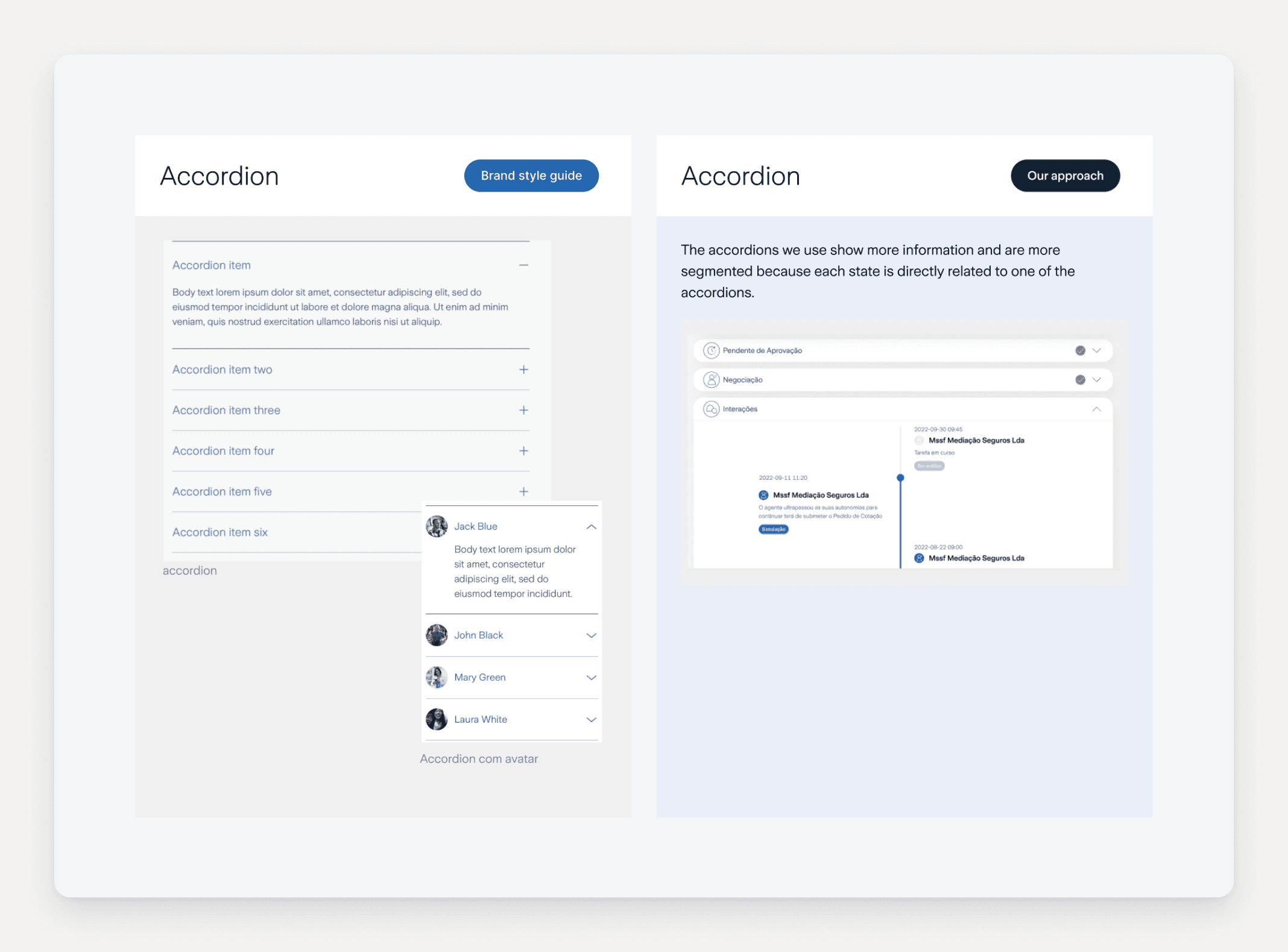
The same held component by component. The brand accordion held body text; in the product, an accordion was a stage of a case, carrying its own status and the interaction history inside it. I worked through them as side-by-side sheets (their component, mine, and the reason for the difference written beside it).
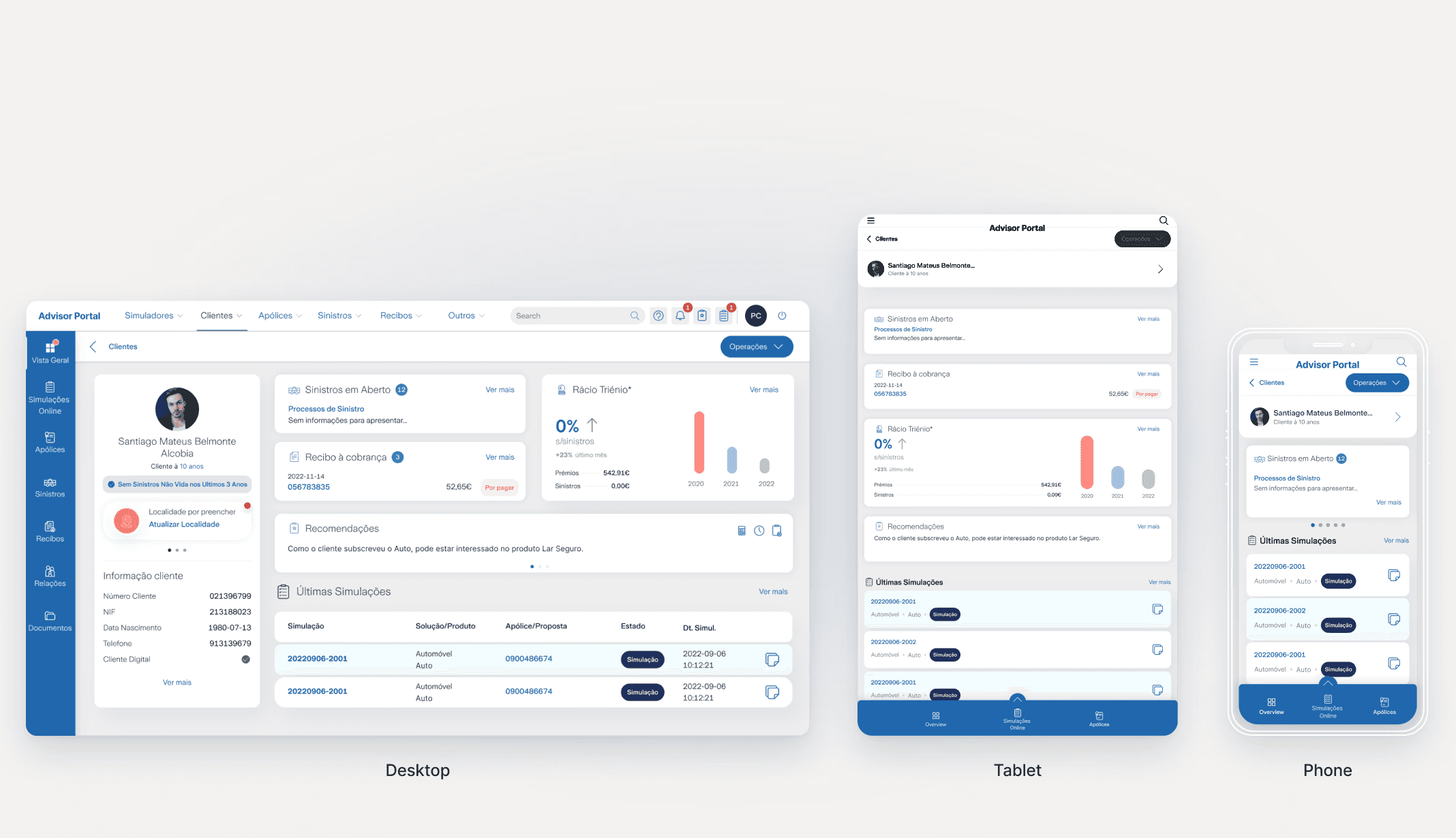
Only then did I draw the workflows at desktop, tablet and phone.


04
The Tension
What I chose
What it cost

The Tension
What I chose
What it cost

The Tension
What I chose
What it cost

05
The application was rebuilt on one component library: twelve screen templates the team builds from, and every service moved onto them. The main workflows kept a single hierarchy across desktop, tablet and phone rather than three separate interpretations of it.
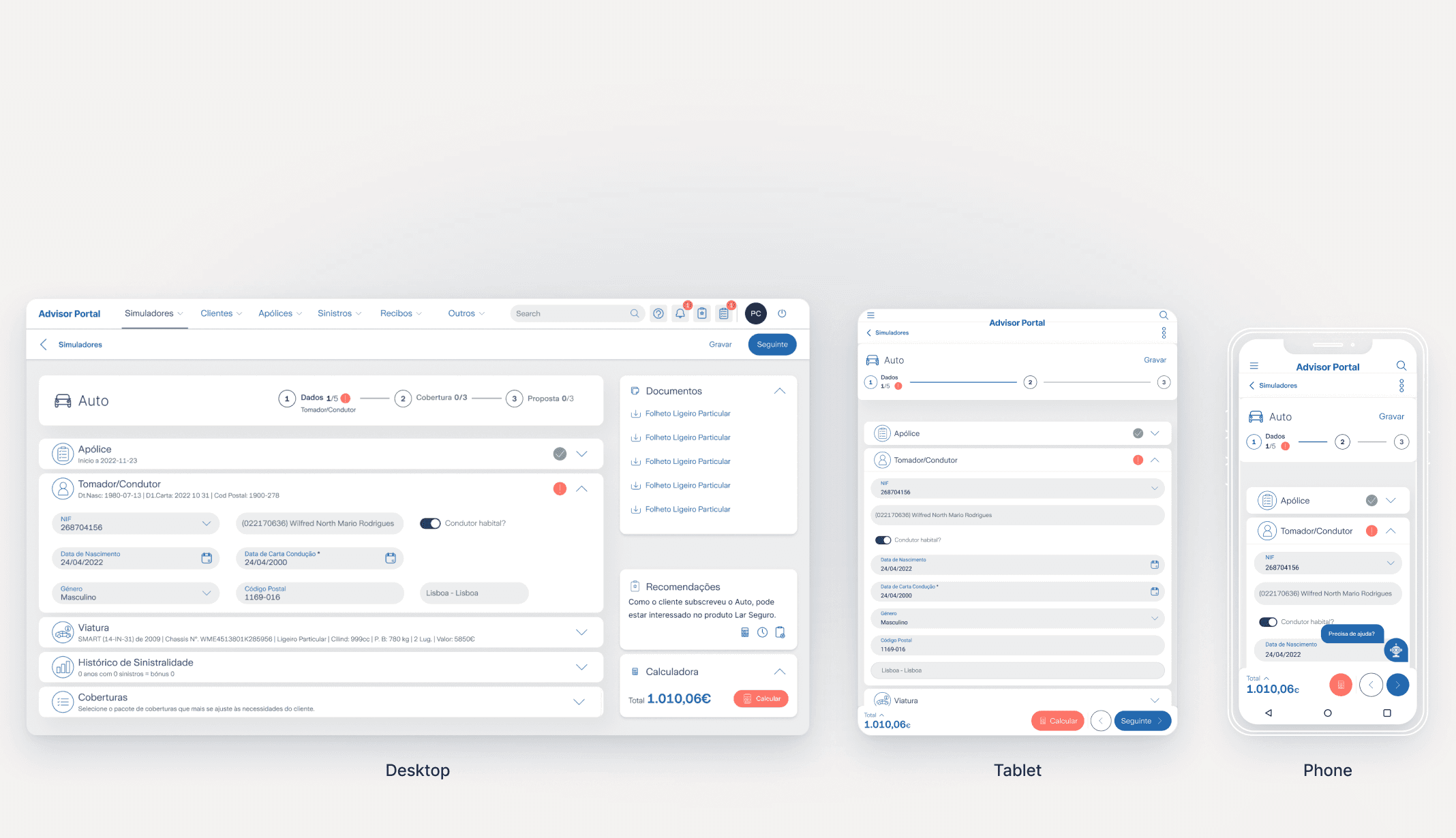
The system outlived the engagement: the client went on to commission two further applications designed on the same components. That is the only evidence I have that these decisions held after I handed them over, and it is the evidence I trust most.
06
HOW IT WAS REVIEWED
WHAT SHIPPED
07
Every service in the application was rebuilt on the component library, and the client went on to commission further applications designed on the same system.
The redesign gave the application a consistent responsive experience, and gave the development team components and screen templates to build from instead of interpreting designs screen by screen. Recurring layouts stopped being redesigned per screen, and component behaviour, responsive rules and edge cases were specified rather than resolved during implementation.
I have no business figures from this project. Any the client holds are confidential.
apps the client commissioned on the same system
screen templates the team builds from
of services rebuilt on the component library
08
A design system only pays off when it can be applied within a product and its technical environment.
I interpreted the established visual standards so they supported real insurance workflows, responsive behaviour and repeatable implementation.