Logistics
Enterprise Product
Under NDA
Role
Senior Product Designer
Disciplines
Product Design, UX, UI and Prototyping
Client
North American industrial rental
Platform
Web & Mobile

01
The project focused on modernising the digital tools used to support a specialised equipment business within a North American industrial rental company.
The existing web and mobile applications depended on a legacy enterprise system that was being replaced by a new rental management platform. This required several operational applications to be redesigned, refactored or created from the ground up.
The wider product ecosystem supported activities such as project planning, logistics, yard operations, deliveries, field execution and asset tracking.
I designed the new operational experience across web and mobile, turning complex logistics and field requirements into workflows that office, yard and field teams could all work from.
02
The business needed to replace a set of legacy operational applications while moving from an older enterprise system to a new rental management platform.
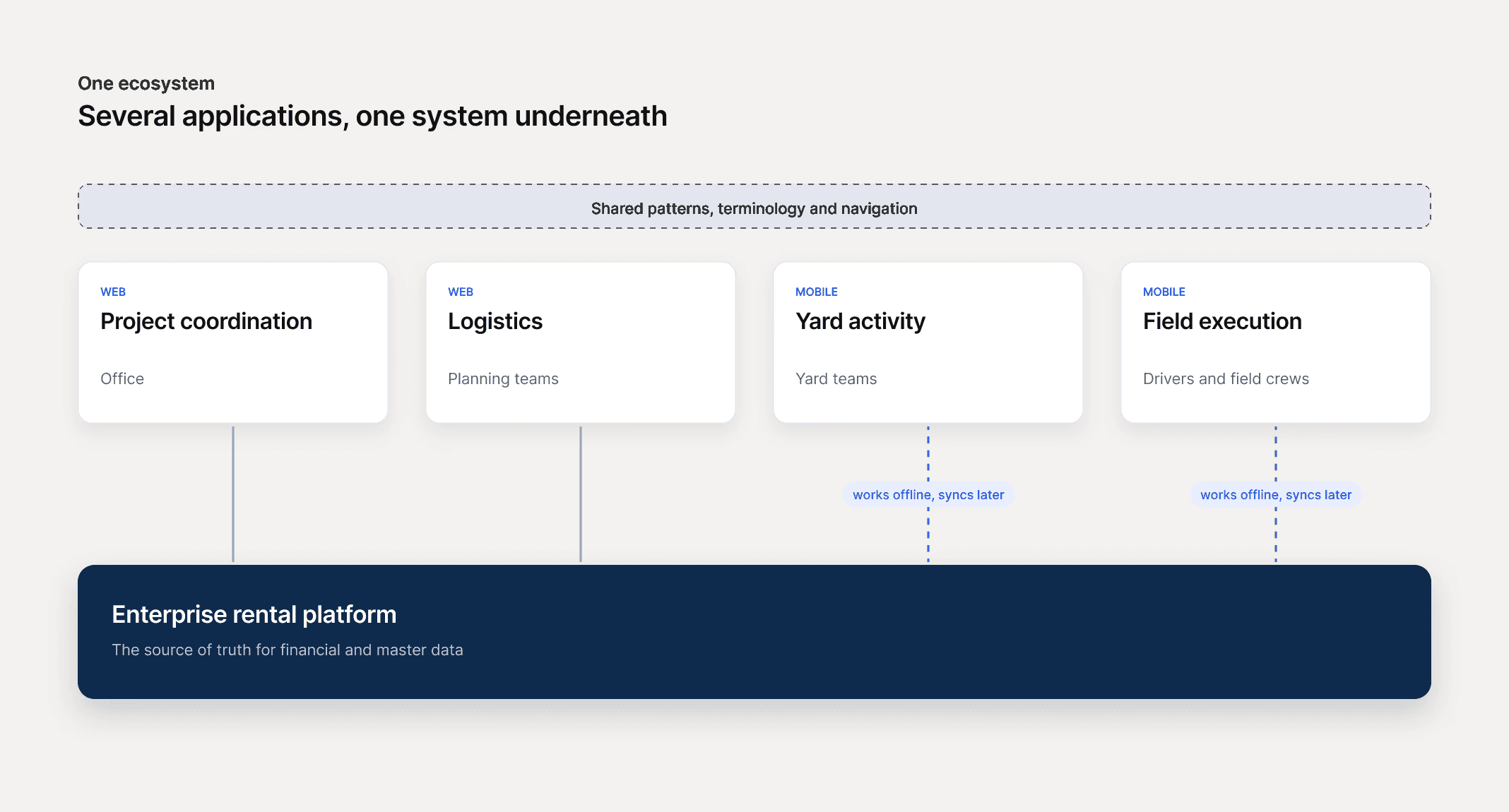
The new system had to remain the source of truth for financial and master data. However, its standard workflows did not fully support the way this specialised business operated.
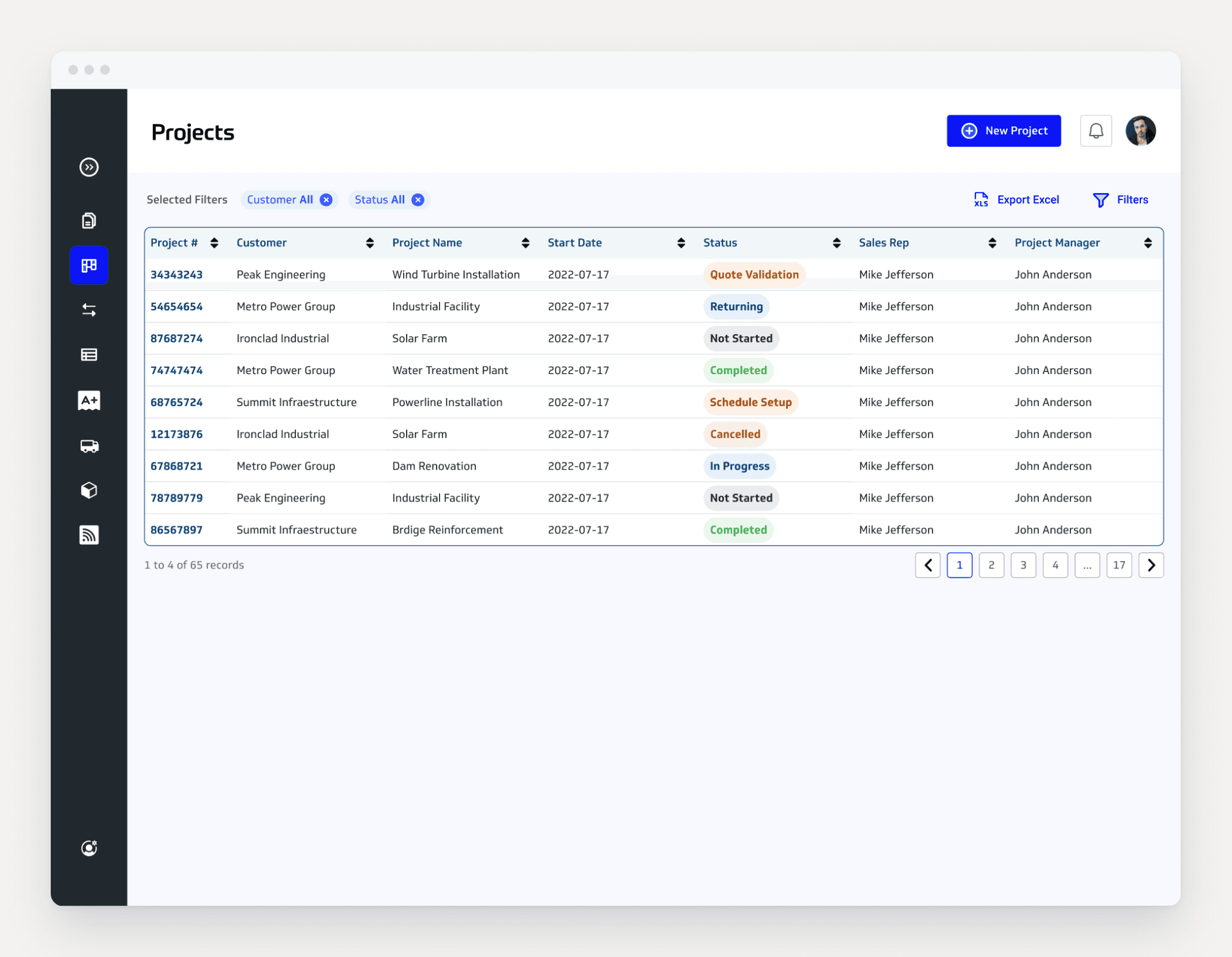
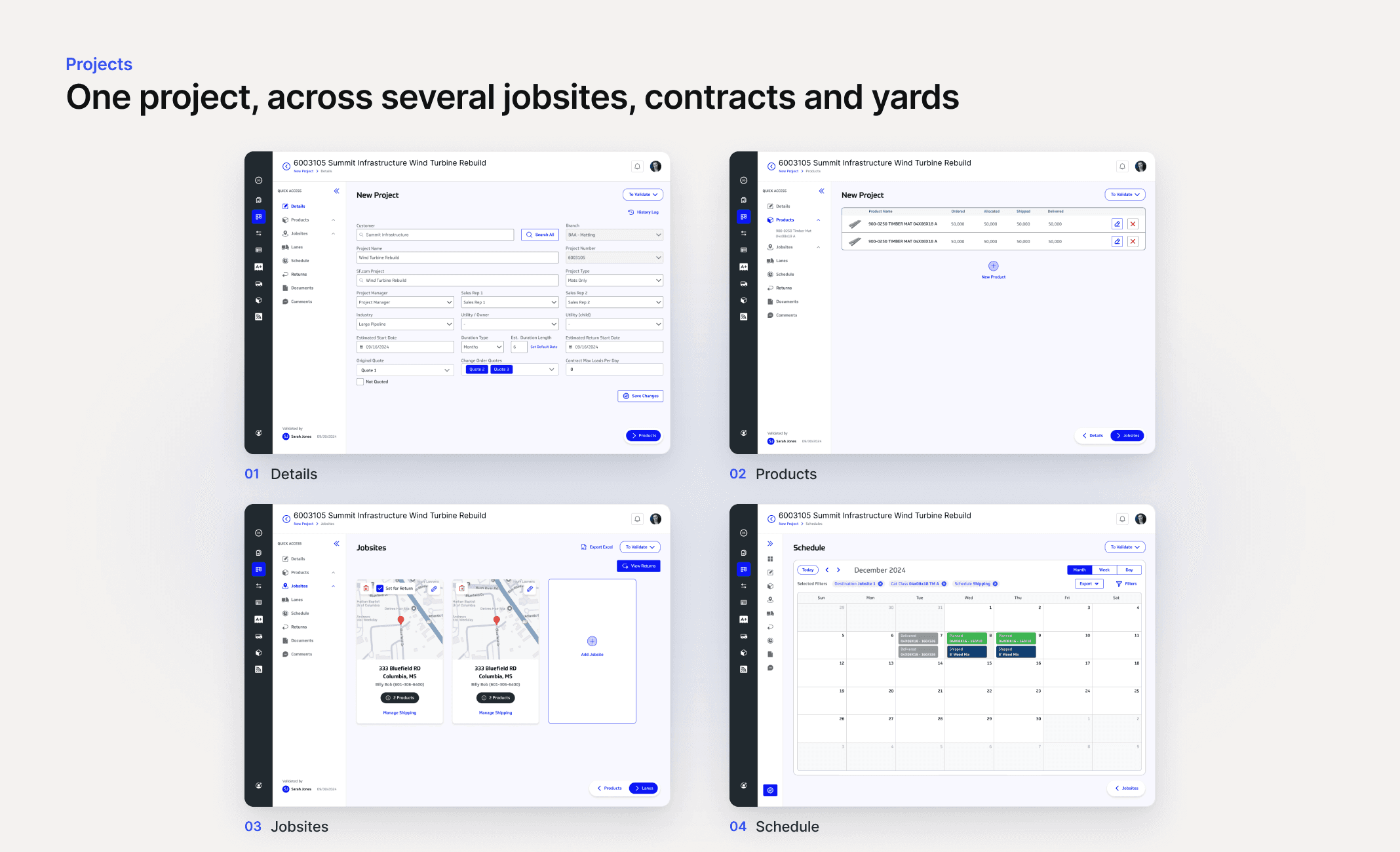
The business managed work through large projects that could span several job sites, contracts, yards and field teams. The underlying enterprise platform did not naturally represent this project structure. That left a gap between the system model and the real operational workflow.
Field and yard teams also worked in remote environments where internet connectivity could be limited or unavailable. The new mobile experience therefore needed to support continuous operations even when users could not remain connected.
03
I mapped one order end to end (quote, order setup, shipment, return) as it ran and as it would have to run. Nine lanes: customer, sales, estimating, customer service, project management, field operations, accounts receivable, freight providers, drivers. I marked every step with who performed it and which system owned it, because nothing could be decided before that.
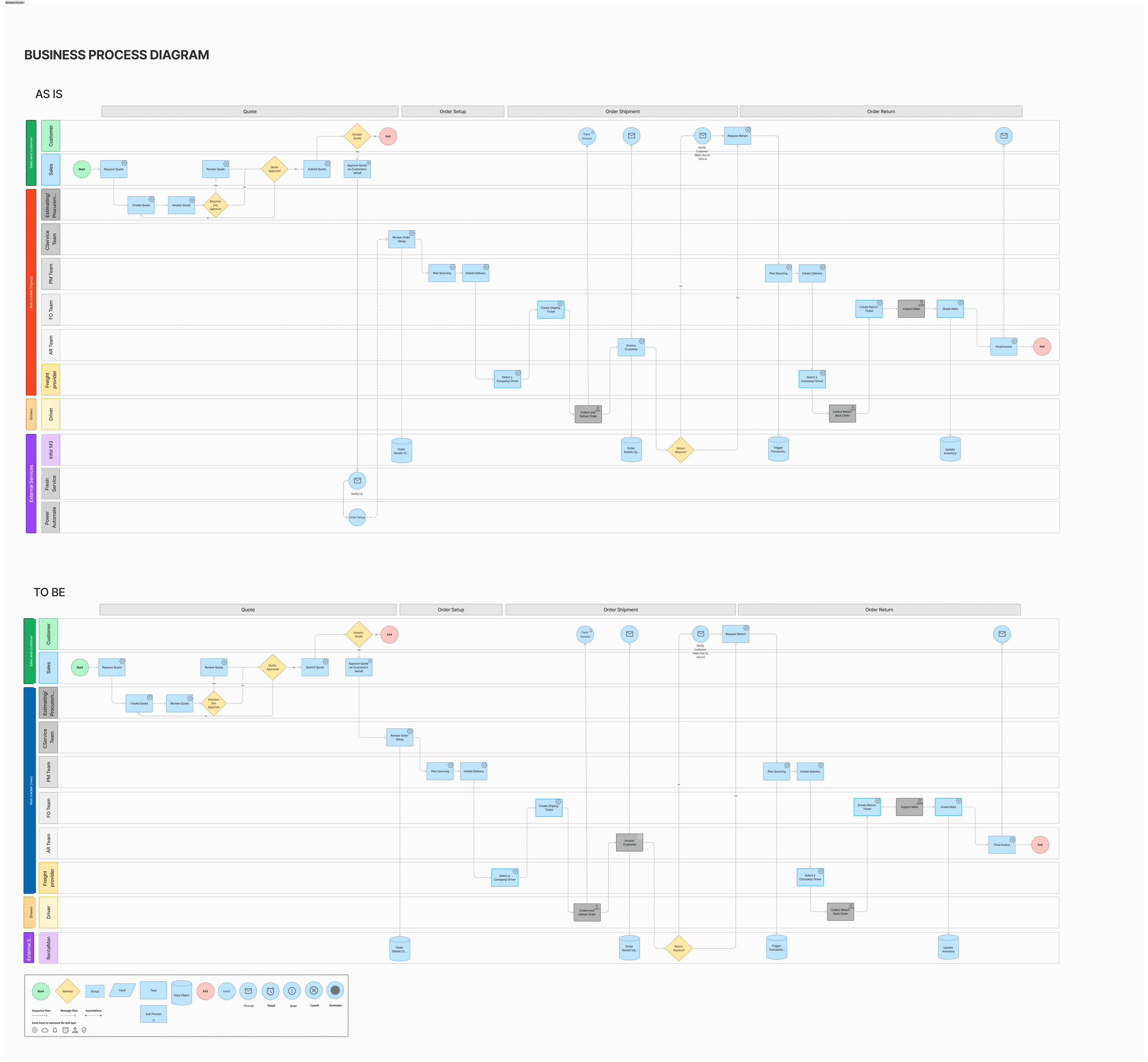
Both versions came out nearly the same shape. The sequence was not the problem; ownership was. The handoff from quote to order setup ran through an email and an automation flow in two outside services.
Three steps belonged to a person, not a system: delivering an order, collecting a return, inspecting what came back. Those happen on a site or in a yard, and the condition recorded there reaches the final invoice.
04
The Tension
What I chose
What it cost
The Tension
What I chose
What it cost
The Tension
What I chose
What it cost

05
The central enterprise platform continued to manage financial and master data, while the new applications provided specialised workflows for project coordination, logistics, yard activity and field execution.
A project holds its own job sites, contracts, freight lanes and delivery schedule.
On mobile, yard and field users create the records the rest of the system depends on: what was delivered, what came back, and in what condition. That work continues without a connection and synchronises when one returns.


06
HOW IT WAS REVIEWED
WHAT SHIPPED
07
85% of the legacy interface replaced. The remaining 15% stayed as it was, because those machines still run an operating system the new stack does not support.
The redesigned ecosystem matched the operational tools to the structure the business actually works in: projects spanning multiple job sites, contracts, yards and field teams. Offline support became part of the core experience. The applications stopped being separate tools that happened to share a back end and became one system that office, yard and field teams move through together.
I have no business or adoption figures beyond those. Any the client holds are covered by the agreement.
for office, yard and field teams
of the legacy interface replaced
08
The legacy applications had evolved around real operational needs, while the new enterprise platform introduced a different data and workflow model. The design challenge was to connect those two realities without disrupting the work of the people using the tools every day.
The project strengthened my understanding of complex operational systems, particularly the relationship between projects, logistics, field activity and enterprise data.
Offline behaviour has to be designed as part of the core product experience.